Nut-Free Pesto Recipe- Delicious & Easy Alternative
Nut Free Pesto is a game-changer for anyone who loves the vibrant, herbaceous flavor of traditional pesto but needs to avoid nuts. We all adore that classic Genovese sauce – its bright basil, garlicky punch, and cheesy undertones can elevate pasta, grilled chicken, and even a simple slice of toast. But for those with nut allergies or looking for a more inclusive option for gatherings, the traditional recipe is off the table. That’s where this incredible Nut Free Pesto shines! It delivers all the beloved characteristics of the origin extractal, but with a clever twist that makes it accessible to almost everyone. Get ready to fall in love with this versatile, delicious, and allergy-friendly sauce that will quickly become a staple in your kitchen.
Why You’ll Love This Nut Free Pesto
The Ultimate Allergy-Friendly Classic
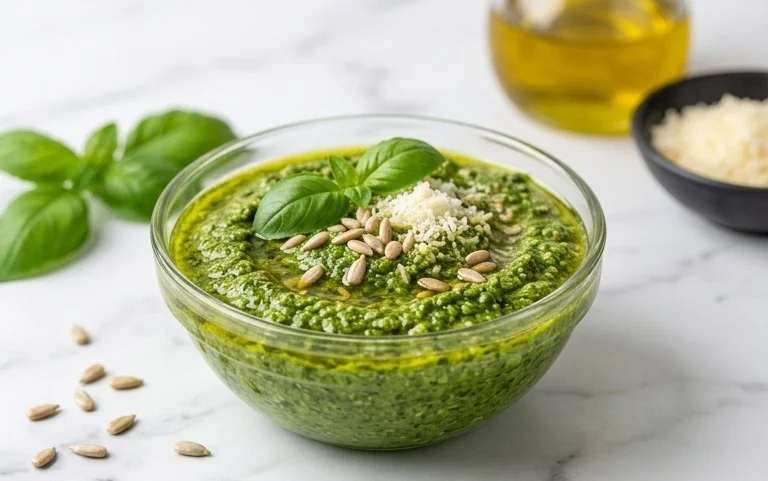
Nut-Free Pesto Perfection
For many, pesto is synonymous with summer picnics and vibrant pasta dishes. The classic combination of basil, garlic, Parmesan, and pine nuts offers a burst of fresh, herbaceous flavor that’s hard to beat. However, for those with nut allergies, enjoying this beloved sauce can be a source of anxiety. Fear not! I’ve developed a sensational nut-free pesto recipe that captures all the deliciousness of the origin extractal without any of the allergens. This recipe is incredibly versatile, perfect for pasta, sandwiches, grilled vegetables, or even as a dip. It’s so easy to make, you’ll wonder why you ever bought store-bought!
The beauty of this nut-free pesto lies in its simplicity. We’re swapping out the traditional pine nuts for a more readily available and allergy-friendly base, while still ensuring a rich and satisfying texture. This recipe is perfect for anyone looking to avoid nuts, whether due to allergies, dietary preferences, or simply wanting to try something new. The intense aroma of fresh basil, combined with the pungent kick of garlic and the salty bite of Parmesan, creates a flavor profile that’s truly addictive.
Let’s talk about the star of the show: basil. Using fresh, vibrant basil is absolutely key to achieving the best flavor. Look for bright green leaves that are free from any wilting or dark spots. If you have a garden, picking your own basil just before you plan to make the pesto will yield the most aromatic results. Don’t be tempted to use dried basil; it simply won’t provide the same fresh, zesty punch.
The garlic, of course, adds that characteristic pungency. You can adjust the amount of garlic to your personal preference. If you’re a garlic lover, feel free to add an extra clove or two. Just be mindful that raw garlic can be quite strong, so start with the suggested amount and taste as you go.
Parmesan cheese brings a delightful salty and umami depth. For the best texture and flavor, I highly recommend using freshly grated Parmesan. Pre-shredded cheeses often contain anti-caking agents that can make your pesto a little gritty. Grating it yourself ensures a smoother, more integrated sauce.
Finally, the olive oil acts as the emulsifier, bringin extractg all the ingredients together into a cohesive, luscious sauce. A good quality extra virgin extract olive oil will impart its own subtle fruity notes, enhancing the overall flavor of the pesto.
Ingredients:
Cooking Instructions:
Creating this delicious nut-free pesto is a breeze. You can use a food processor, a blender, or even a mortar and pestle if you’re feeling traditional and have a bit of elbow grease to spare! I find a food processor to be the most efficient for this recipe, delivering a beautifully smooth and consistent texture.
1. Prepare the Basil: Begin extract by thoroughly washing your fresh basil leaves. Gently pat them dry with a clean kitchen towel or use a salad spinner to remove excess moisture. It’s important that the basil is dry to prevent your pesto from becoming watery. Once dry, remove the basil leaves from their stems. While you can include a few tender stems, it’s best to discard the tougher, woody parts as they can add a bitter flavor and an unpleasant texture to your pesto. You should have about 2 cups of packed basil leaves.
2. Infuse with Garlic: Add the 2 peeled garlic cloves to the bowl of your food processor. Pulse them a few times until they are roughly chopped. This initial pulsing helps to break down the garlic, making it easier for the other ingredients to incorporate and distribute its flavor evenly throughout the pesto. If you are sensitive to raw garlic, you can lightly roast the garlic cloves before adding them. To do this, wrap them in foil with a drizzle of olive oil and bake at 400°F (200°C) for about 15-20 minutes, or until softened and fragrant. This mellows the sharpness of the garlic considerably.
3. Combine the Dry Ingredients: Add the 2 cups of fresh basil leaves to the food processor with the garlic. Next, add the 1/2 cup of freshly grated Parmesan cheese. Pulse the mixture a few times until the basil is finely chopped and the Parmesan is well incorporated. Scrape down the sides of the food processor bowl as needed to ensure all the ingredients are being uniformly processed. The mixture will start to look like a vibrant green paste at this stage.
4. Emulsify with Olive Oil: With the food processor running on a low speed, slowly drizzle in the 1/4 cup of olive oil through the feed tube. Continue to process until the pesto is smooth and emulsified, reaching your desired consistency. You want a creamy, slightly pourable sauce. If you prefer a thicker pesto, you can use a little less olive oil. Conversely, if you’d like a thinner, more sauce-like consistency for pasta, you can add a tablespoon or two more olive oil. It’s also during this stage that you can incorporate the 1/4 teaspoon of salt and 1/8 teaspoon of pepper. Taste the pesto and adjust the seasoning as needed. Some people like a little more salt to bring out the flavors, while others prefer a bit more pepper for a subtle kick.
5. Final Touches and Serving Suggestions: Once you’ve achieved the perfect consistency and seasoning, your nut-free pesto is ready to be enjoyed! Transfer the pesto to an airtight container. For the best flavor and to prevent oxidation, I like to pour a thin layer of olive oil over the top of the pesto before sealing the container. This creates a barrier that helps to keep the pesto fresh. You can store it in the refrigerator for up to a week. This versatile pesto is fantastic tossed with your favorite pasta, spread on toasted bread for a gourmet sandwich, or drizzled over grilled chicken, fish, or vegetables. Don’t be afraid to experiment with different dishes! It’s also a wonderful addition to a charcuterie board.
Conclusion:
I hope you’re as excited about this nut-free pesto as I am! It’s a fantastic solution for anyone dealing with nut allergies or simply looking to broaden their pesto horizons. This recipe proves that you don’t need pine nuts to achieve that vibrant, herbaceous, and satisfying pesto flavor. It’s incredibly versatile, delivering a burst of freshness to pasta dishes, sandwiches, roasted vegetables, and so much more. The simplicity of the ingredients and the ease of preparation make it a weeknight-friendly staple that I find myself reaching for again and again.
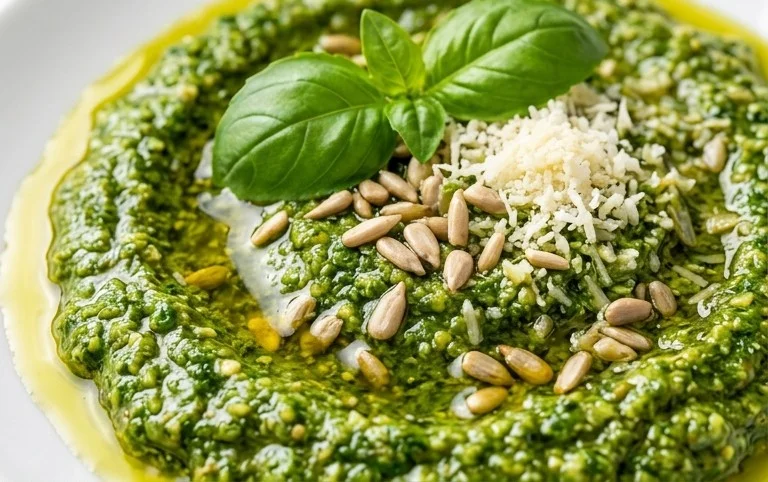
Don’t be afraid to experiment with this nut-free pesto! Try swapping out the basil for spinach, arugula, or a combination of herbs. You can also play with different seeds, like sunflower seeds or pumpkin seeds, for a slightly different flavor profile and texture. I truly encourage you to give this recipe a go; you might just find it becomes your new go-to pesto.
Frequently Asked Questions:
Can I freeze this nut-free pesto?
Yes, absolutely! I often make a double batch and freeze portions in ice cube trays or small containers. Once frozen, you can transfer the pesto cubes to a freezer bag for easy thawing and use. It’s a great way to have delicious, fresh-tasting pesto on hand whenever you need it.
What can I use instead of Parmesan cheese if I want a vegan version?
For a delicious vegan nut-free pesto, you can omit the Parmesan cheese and add a tablespoon or two of nutritional yeast. This will give you a cheesy, umami flavor without any dairy. Some people also add a pinch of white miso paste for added depth of flavor.
Nut-Free Pesto
A classic pesto recipe made without nuts, perfect for those with allergies or looking for a lighter option. This vibrant sauce is great on pasta, sandwiches, and more.
Ingredients
-
2 cups fresh basil
-
2 garlic cloves
-
1/2 cup freshly grated Parmesan cheese
-
1/4 cup olive oil
-
1/4 teaspoon salt
-
1/8 teaspoon pepper
Instructions
-
Step 1
Wash and thoroughly dry the fresh basil leaves. -
Step 2
Peel the garlic cloves. -
Step 3
In a food processor, combine the basil leaves, garlic, and Parmesan cheese. -
Step 4
Pulse until coarsely chopped. -
Step 5
With the food processor running, slowly drizzle in the olive oil until the pesto is smooth. -
Step 6
Stir in the salt and pepper to taste.
Important Information
Nutrition Facts (Per Serving)
It is important to consider this information as approximate and not to use it as definitive health advice.
Allergy Information
Please check ingredients for potential allergens and consult a health professional if in doubt.